By Greg Resha | November 20, 2026 | 3 Minute Read
Highlights
- Cold temperatures do not eliminate ultraviolet radiation.
- Snow can reflect UV, making protection particularly important for winter outdoor activities.
- Use broad-spectrum SPF 30 or higher on exposed skin and combine it with clothing and shade.
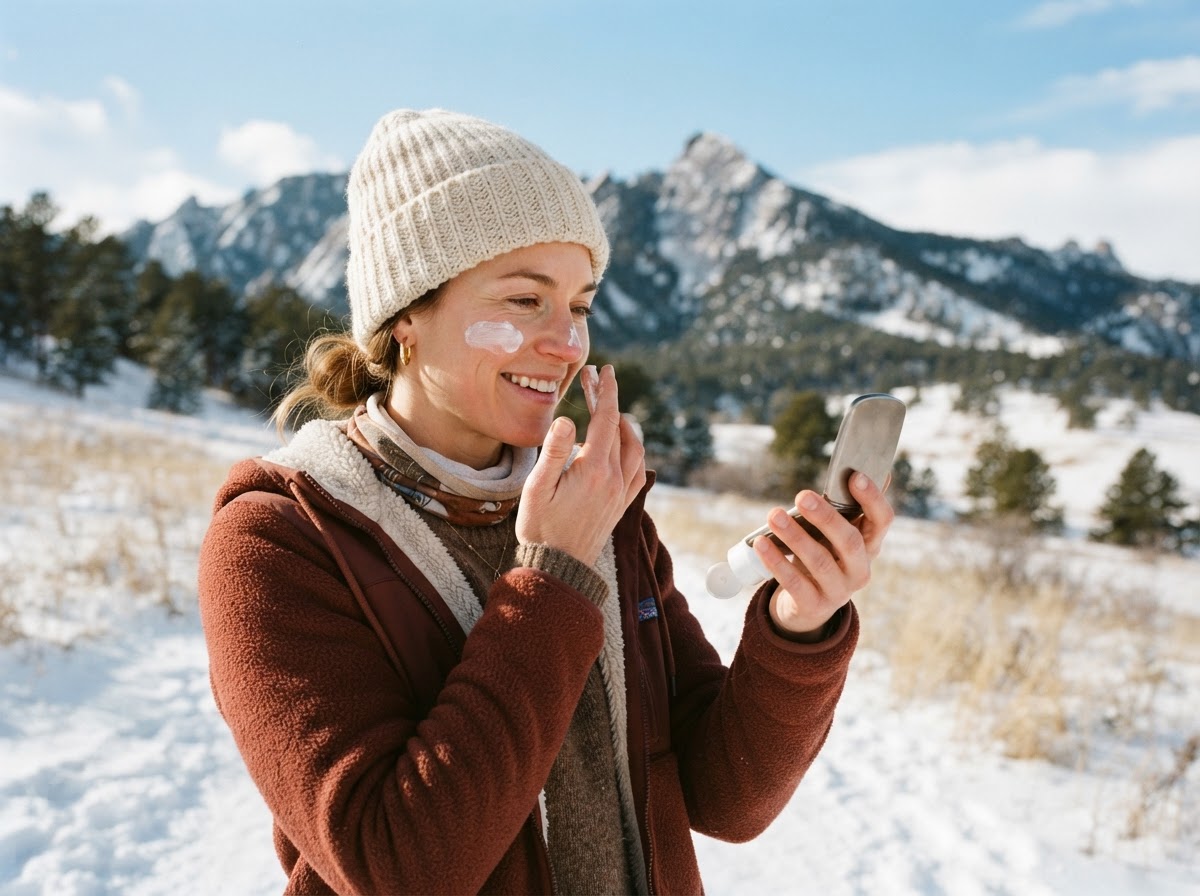
Yes, winter sun protection still matters. Ultraviolet radiation is present in cold weather, and snow can reflect it toward exposed skin. If you spend time outside in winter, protect your face, ears, lips, and other uncovered areas with a broad-spectrum sunscreen of SPF 30 or higher, along with appropriate clothing and shade.

The temperature is not the UV index
I live in Colorado, where a beautiful winter day can feel downright cold while sunlight is bright enough to make you squint. That is a good reminder that temperature and ultraviolet exposure are not the same thing. You can be chilly and still accumulate sun exposure, particularly during long periods outside.
The American Academy of Dermatology recommends winter sun protection and highlights additional exposure from snow reflection and higher elevations. It is particularly relevant for skiing, snowboarding, hiking, and outdoor work. A winter hat is useful, but it does not cover every exposed surface.
What should winter sunscreen actually do?
Choose a sunscreen labeled broad-spectrum, which means it protects against both UVA and UVB radiation, with an SPF of at least 30. Apply enough to cover the skin that clothing does not protect. Reapply about every two hours when you remain outdoors, and after sweating or other situations described on the product label. Water-resistant sunscreen is useful for active outdoor days.
If winter dryness bothers you, a moisturizing sunscreen may feel more comfortable than a very light formula. But make sure it is a real sunscreen with a labeled SPF, not merely a moisturizer marketed as protective. For more on formula choices, see my earlier discussion of hydration and SPF in daily skincare.
Your routine does not need to become complicated
In the morning, use a gentle cleanser if you need one, moisturize if your skin feels dry, and finish with sunscreen before makeup. Give products enough time to settle so they do not bunch up. If you are outdoors all afternoon, take protection with you rather than assuming a morning application lasts all day.
A hat, sunglasses, protective clothing, and shade are part of a sensible plan. Sunscreen is an important tool, not a reason to skip every other form of protection. Some winter days have a low UV index, but a habit of checking conditions and protecting exposed skin makes more sense than using the temperature as your guide.
A word about sensitive winter skin
Dryness or irritation can make applying products less pleasant. Look for a formula your skin tolerates and consider fragrance-free options. The best sunscreen is one you are willing to use properly and consistently. Claims that every mineral sunscreen is automatically cooler or gentler than every other formula are too broad. Individual formulations and personal tolerance matter more than a simple marketing category.
A live demonstration can make sunscreen application easier to understand, especially when you are layering it with moisturizer or makeup. The Skincare Social brings that kind of practical skincare education to groups in homes, community clubhouses, and organization meetings, with questions welcome and no purchase required.
Takeaway
The cold does not switch off UV exposure. Protect exposed skin in winter, especially around snow or during long outdoor activities, and choose a sunscreen you can comfortably use again and again.
Greg Resha is a licensed Colorado esthetician, skincare educator, makeup artist, and author with more than 20 years of beauty industry experience. He hosts The Skincare Social to help people understand practical skincare.
Leave a Reply